
Licensed Massage Therapist in New Jersey
Holistic healing is an approach to wellness that treats the whole person — physically, mentally, and spiritually — to achieve optimal health and balance. All aspects to life are interconnected. A disruption in one area affects the entire person as a whole.
Massage Therapy for Relaxation + Recovery
Christine Abbate, L.M.T.
Licensed Massage Therapist (January 2027) + Certified Yoga Alliance Teacher (2011)
Relax + revitalize with any of these therapeutic services:
Full Somatic Reset
Cranial Therapy
Upper Body
Lower Body
Hand + Foot
Emotional Processing
Responder / Emergency / Military Discounts: Essential recovery and stress relief for high-intensity jobs.
20% Off All Services – Email your ID for a discount code before booking.
Professional Draping: Modesty and privacy are protected at all times through proper professional draping methods. Only the area of the body actively receiving treatment is uncovered.
Right to Terminate: The therapist maintains the right to end any session immediately if a client exhibits inappropriate behavior, language, or conduct. In such cases, full payment for the scheduled service is retained and future appointments will be declined.
Locations in North New Jersey.
For appointments, email: LMT@christine-abbate.com
Website
As your licensed massage therapist, I do not diagnose medical conditions. Massage therapy is not a substitute for medical evaluation or treatment.
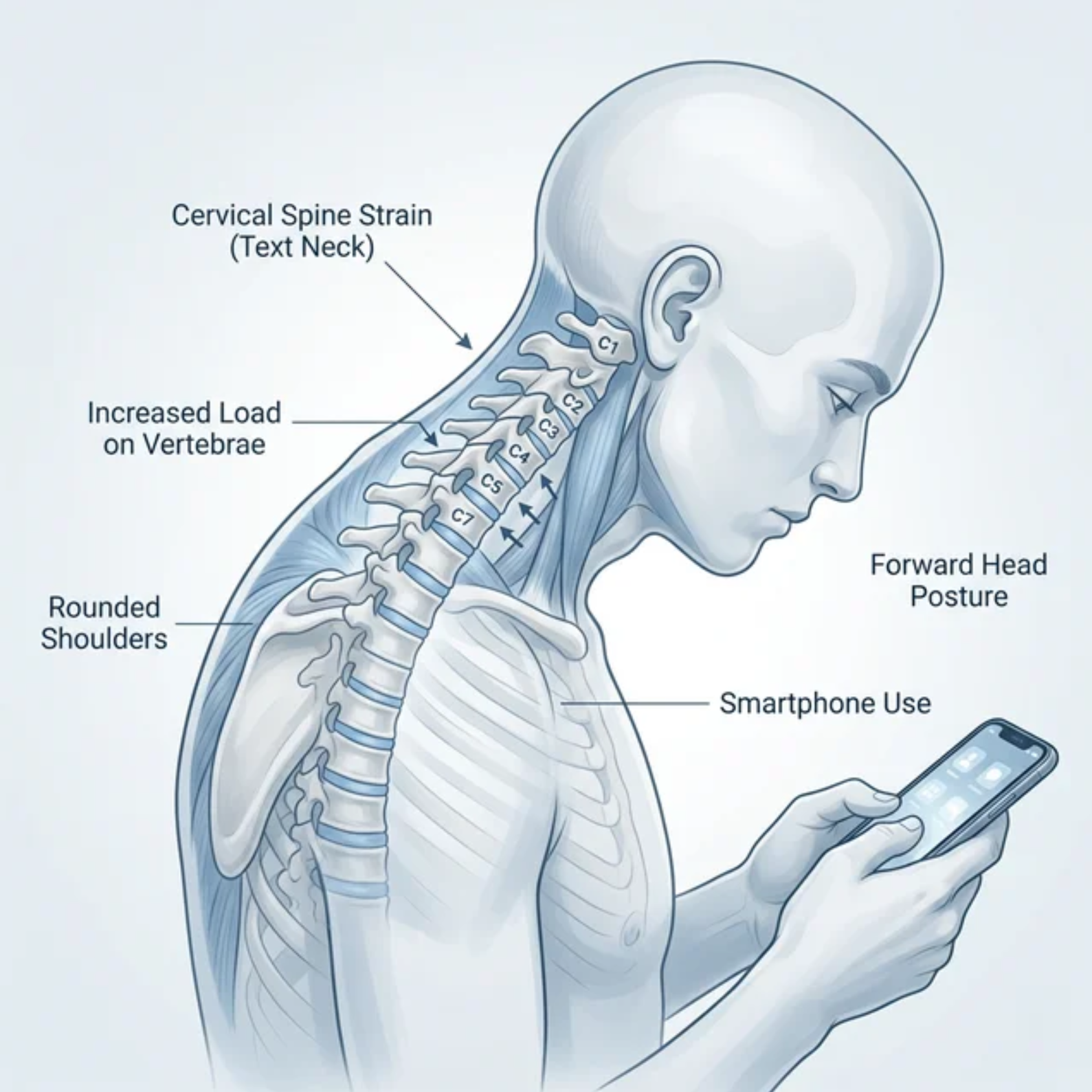
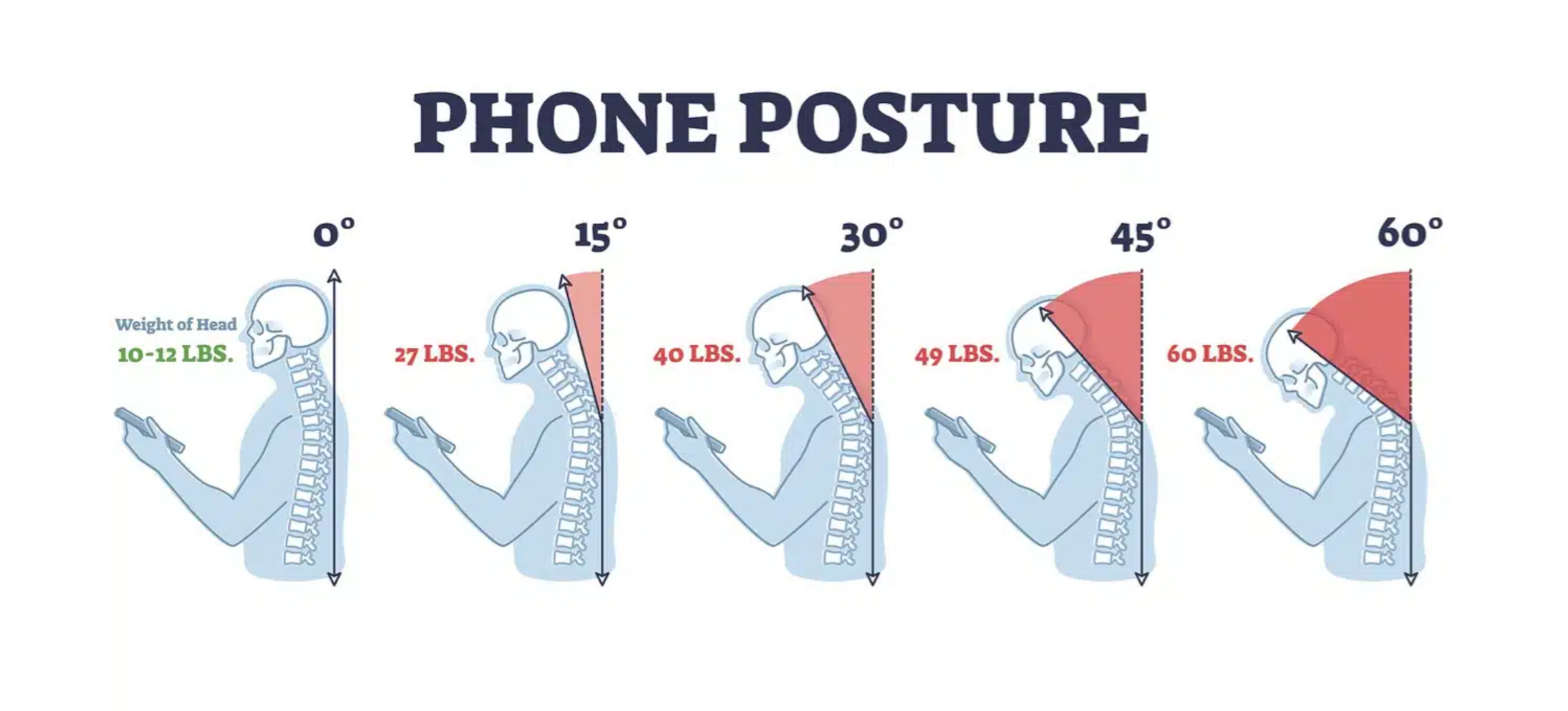
Don’t be a hunched doom scroll zombie!
To prevent “text neck” and chronic strain, bring your phone to eye level instead of hunching your head and shoulders downward.
PATHOMECHANICS OF TRAPEZIUS TENSION & NECK–SHOULDER OVERLOAD
The trapezius is one of the most important postural muscles in the body, linking the skull, cervical spine, thoracic spine, clavicle, and scapula into a single kinetic chain.
Because of this extensive attachment system, abnormal loading in the neck/shoulders often creates widespread tension through the entire upper body.
Pathomechanically, upper trapezius tension usually begins with prolonged static posture, forward head alignment, rounded shoulders, emotional stress, repetitive overhead activity, or poor scapular control.
These factors reduce circulation and increase strain at muscular attachment sites.
Trigger points within the upper trapezius commonly refer pain toward the occiput, temporal region, jaw, and shoulder. Patients may experience tension headaches, burning between the shoulder blades, or heaviness in the arm despite the primary dysfunction originating in postural overload.
Biomechanically, chronic trapezius tension changes cervical loading patterns. Increased cervical extension at the upper segments combined with flexion at lower cervical segments creates abnormal joint compression and muscular imbalance. This can eventually contribute to cervical facet irritation, nerve sensitivity, reduced mobility, and chronic myofascial pain syndromes.
Respiratory mechanics are also influenced. Individuals with upper trapezius overactivity often rely excessively on accessory breathing muscles instead of diaphragmatic breathing. This further increases neck tension and reinforces dysfunctional movement patterns.
Over time, the body adapts to this abnormal motor strategy. The upper trapezius remains hyperactive while deep neck flexors, lower trapezius, and scapular stabilizers become progressively weaker. The result is a self-perpetuating cycle of tension, altered posture, reduced movement efficiency, and chronic pain.
Clinically, trapezius pathomechanics are frequently associated with forward head posture, cervical pain syndromes, tension headaches, thoracic outlet symptoms, scapular dyskinesis, shoulder impingement, and occupational postural fatigue.
Trapezius tension is not simply a “tight muscle” problem — it is a complex biomechanical dysfunction involving posture, scapular control, cervical loading, breathing mechanics, and kinetic chain compensation throughout the upper body.